Maintaining healthy indoor air in commercial properties has become a top operational priority for facility managers, building owners, and business leaders. Commercial buildings face constant indoor air challenges: microbial growth on cooling coils, circulating airborne pathogens, stubborn odors, and rising energy costs driven by reduced airflow.
Traditional HVAC filtration captures larger dust and debris particles, but microscopic bacteria, mold spores, and viruses often pass right through standard air filters. Planning a professional Commercial UV Light Installation to integrate a high-efficiency Commercial UV Light system into your facility’s heating and cooling infrastructure provides a continuous solution that stops bio-contamination at the source.
Below is everything you need to know about costs, operational benefits, and system selection for commercial facilities in 2026.
How UV Technology Improves Commercial Indoor Air Quality
Commercial HVAC units cycle thousands of cubic feet of air every minute. Over time, moisture condensation creates an ideal breeding ground on evaporator coils and drip pans for bio-film, mold, and bacteria. A microscopic layer of organic buildup on a cooling coil can degrade HVAC heat transfer efficiency by over 30%, forcing air handlers to run longer and draw significantly more power.
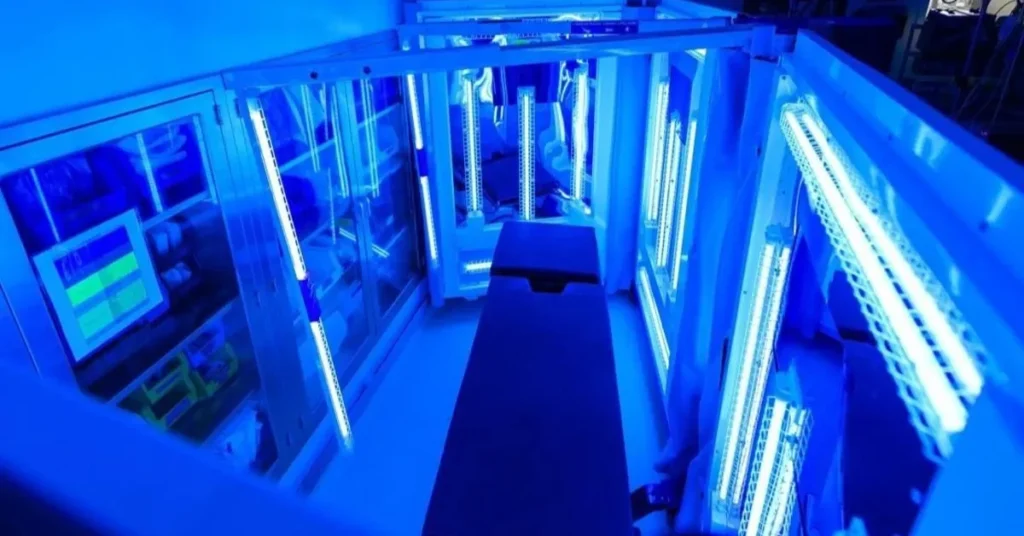
By leveraging short-wave ultraviolet energy (specifically UV-C at 254 nanometers), germicidal radiation penetrates the cellular structure of micro-organisms, damaging their DNA and RNA to render them incapable of replicating.
Implementing target Commercial Indoor Air Quality solutions addresses airborne pollutants before they reach employee workspaces, customer retail floors, or patient rooms.
Types of HVAC UV Light Systems
When planning a Commercial UV Light Installation, facility teams generally choose between two primary setup configurations:
Coil Sterilization Systems
- Installed directly adjacent to evaporator coils and drain pans
- Operates 24/7 to destroy mold, algae, and bacterial bio-films
- Keeps cooling fins clean, preventing airflow restriction and energy waste
In-Duct Air Sterilization Systems
- Installed within main supply or return air duct runs
- Designed with high-output lamps to treat fast-moving air streams
- Ideal for facilities requiring elevated airborne pathogen control, such as medical offices, schools, and high-density corporate settings
Key Benefits of Commercial UV Light Installation
Investing in professional Commercial UV Light Services yields immediate health advantages alongside long-term financial returns:
- Lower Energy Bills: Restoring thermal efficiency on coils can lower HVAC energy consumption by 10% to 25%
- Reduced Maintenance Costs: Eliminates the need for frequent chemical coil cleanings, extending equipment service lifespan
- Pathogen Reduction: Inactivates up to 99% of airborne viruses, bacteria, and fungal spores moving through ductwork
- Odor & VOC Elimination: Helps eliminate damp, musty HVAC smells and volatile organic compounds
- Healthier Workspaces: Decreases indoor trigger factors for allergies and sick building syndrome, helping reduce workplace absenteeism
Proper duct cleaning prior to installing UV Light for Commercial HVAC maximizes light reflection and overall disinfection efficiency. MDF Air Duct Cleaning delivers detailed system inspection and duct restoration services to ensure your air conveyance network is prepared for optimal UV performance.
2026 Commercial UV Light Cost Breakdown
Understanding initial equipment investments versus recurring upkeep allows building managers to budget accurately.
| System Type | Average Equipment & Installation Cost | Annual Maintenance / Lamp Replacement |
| Small Commercial Unit (up to 7.5 Tons) | $800 – $1,800 | $150 – $300 |
| Medium Commercial Air Handler (10–25 Tons) | $2,000 – $4,500 | $300 – $600 |
| Large Industrial / Multi-Zone System | $5,000 – $12,000+ | $700 – $1,500+ |
Factors Influencing Overall Costs
- Air handler tonnage and total square footage of ducting
- Single-lamp vs. multi-rack high-output UV-C configurations
- Custom mounting brackets, power supplies, or reflective duct liners
- Optional titanium dioxide or activated carbon modules for VOC neutralization
With typical utility savings ranging between $300 and $1,500 annually per commercial air handler, most facilities recover their initial investment within 2 to 4 years.
Working with a trusted team like MDF Air Duct Cleaning ensures accurate system sizing, seamless integration, and maximum return on investment.
2026 Buyer’s Checklist for Facility Managers
Before scheduling your UV-C Light Installation, ensure your selected system meets these modern industry standards:
- Ozone-Free Certification: Verify that lamps produce zero harmful ozone emissions to protect occupant respiratory health
- High-Output Intensity: Ensure lamp intensity matches air velocity so fast-moving airborne microbes receive adequate exposure time
- Safety Interlocks: Confirm that access doors feature automatic shut-off switches to prevent technician exposure during routine service
- Professional Maintenance Schedule: Plan for annual bulb replacements, as germicidal output degrades over 9,000 to 12,000 hours of continuous use
Partnering with MDF Air Duct Cleaning guarantees that your Commercial Air Purification upgrade is installed safely, efficiently, and in full compliance with manufacturer recommendations.
Frequently Asked Questions
How long do commercial UV-C bulbs last?
Commercial UV-C lamps typically operate continuously for 9,000 to 12,000 hours (about 12 to 14 months) before their germicidal intensity drops below effective disinfection levels. Annual bulb replacement is recommended to maintain peak performance.
Can commercial UV lights replace standard HVAC air filters?
No, UV lights do not capture physical dust, dirt, or debris. They work alongside high-efficiency physical air filters by neutralizing microscopic bacteria, mold spores, and viruses that pass through filter media.
Do UV lights produce harmful ozone in commercial spaces?
Quality modern commercial UV systems are engineered as zero-ozone or low-ozone units operating at the specific 254 nm wavelength. Always ensure your equipment is UL-listed and certified ozone-free.
How quickly do commercial UV lights pay for themselves?
Most commercial buildings experience a full return on investment within 2 to 4 years through reduced HVAC energy consumption, lower coil maintenance expenses, and longer equipment service life.
Why should ductwork be cleaned before UV light installation?
Installing UV lights in dirty or dusty ductwork reduces germicidal light reflection and overall system efficiency. Professional duct cleaning removes built-up dust and debris, allowing the UV-C radiation to perform at maximum capacity.
Protect Your Building’s Air Quality Today
Upgrading your HVAC system with modern HVAC UV Light Systems is one of the most effective ways to lower operational overhead while safeguarding workplace health.
For professional estimates, detailed duct evaluations, and commercial air quality solutions, contact MDF Air Duct Cleaning today:
- Phone: (224) 463-7739
- Email: mdfairduct@gmail.com