
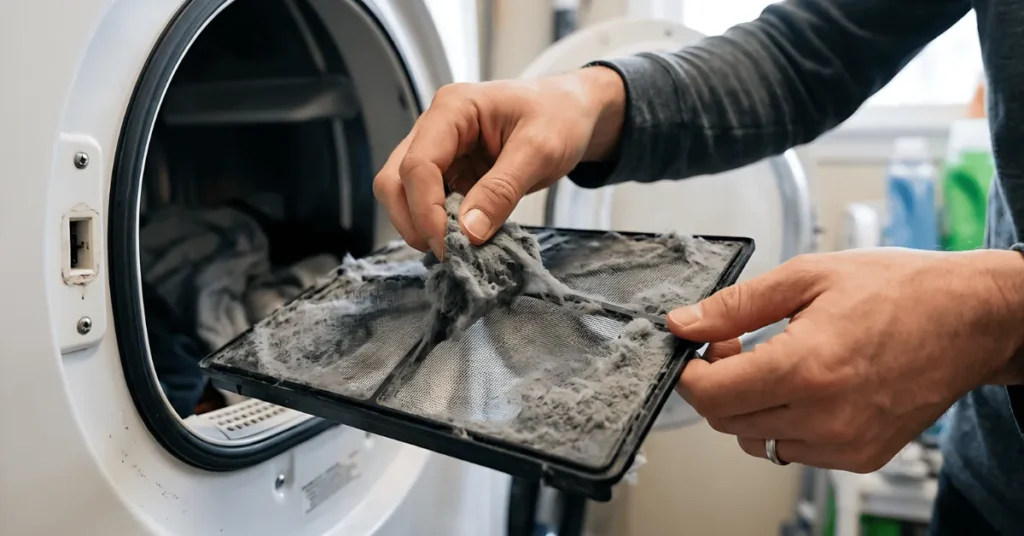
Every year, thousands of house fires start in home laundry rooms across the country, and the leading cause is surprisingly simple: built up dryer lint. While most homeowners faithfully clean the lint screen after every single load, that small mesh panel captures only a fraction of the debris your clothes shed during a drying cycle. The rest of that fine, highly flammable fuzz drifts deeper into the appliance cabinet, settles in the exhaust transition duct, and coats the interior walls of your vent line. Over time, this creates a major airflow restriction that slows down your laundry routines, spikes your monthly energy bills, and creates a serious fire hazard right inside your laundry area.
Understanding how to clean lint from dryer components and keeping your entire venting pathway clear is one of the most effective ways to protect your home and preserve your appliances. Whether you are dealing with a noticeable drop in machine performance or simply performing routine seasonal maintenance, knowing the right steps for cleaning dryer lint will keep your system running safely and efficiently.
Why Dryer Lint Build Up Is a Serious Problem
Every time you toss a wet load of clothes into the dryer, the tumbling action strips off thousands of microscopic fabric fibers. The moisture-laden air carries these fibers toward the exhaust system. While the primary lint trap catches larger clumps, warm air carries tiny particles past the filter housing and into the internal workings of the machine.
When lint buildup in dryer vent lines becomes severe, it creates a physical dam that prevents heat and moisture from escaping your house. This restricted airflow forces your dryer to work significantly harder and run at far higher temperatures than designed. The thermal limit switches begin to cycle on and off constantly, putting immense stress on the heating element or gas burner assembly.
Even worse, dryer lint consists of compressed cotton, polyester, and synthetic fibers coated in dried laundry detergent residues. This combination forms an ideal fuel source for fires. If the internal temperature inside the heating chamber spikes high enough, or if a spark jumps from an aging heating coil, the dry lint ignites instantly, pulling flames directly into the exhaust pipe.
Warning Signs Your System Is Clogged
Catching an airflow issue early prevents costly appliance repairs and dangerous overheating incidents. Look out for these common warning signs:
- Extended Drying Cycles: Clothes take two or three full cycles to dry completely instead of just one.
- Excessive Surface Heat: The exterior top of the dryer or the laundry room itself feels unusually hot during operation.
- Musty Odors: Clean clothes come out smelling damp, stale, or moldy because moist air cannot exit the drum properly.
- Visible Debris Outside: You notice zero lint exiting the exterior wall duct hood outside your home while the dryer is running.
- Burnt Smell: A faint burning scent indicates that trapped fibers inside the cabinet are coming into direct contact with the heat element.
If you recognize any of these symptoms, your system has likely developed a clogged dryer vent that requires immediate attention.
Step by Step Guide to Cleaning Dryer Lint
To restore full airflow and clear away stubborn obstructions, follow this thorough maintenance procedure using standard home cleaning tools.
Safety Preparation
Before starting any work, unplug the dryer from the electrical wall outlet. If you have a gas dryer, shut off the gas supply valve located along the line behind the unit. Pull the appliance away from the wall so you have plenty of space to maneuver safely.
Clean the Lint Trap Screen and Housing
Remove the lint filter screen and peel off any visible surface fuzz. Wash the screen in hot water with mild dish soap to strip away invisible waxy layers left behind by fabric softeners and dryer sheets. Dry the screen completely. Before reinserting it, attach a long, flexible vacuum hose attachment to your vacuum cleaner. Guide the thin nozzle deep down into the lint trap slot to pull out accumulated clumps buried at the bottom of the air chute.
Clear the Transition Duct
Disconnect the flexible duct pipe connected to the rear exhaust port of your machine. Using a flashlight, inspect the inside of the flexible line. Vacuum out any dense mats of fuzz resting inside the tube. If your transition hose is made of thin foil or plastic, replace it immediately with a semi-rigid aluminum connector, as flexible plastic hoses are highly flammable and prone to crushing.
Clean the Main Duct Line
Insert a specialized dryer vent cleaning brush system into the wall duct opening. These long, flexible rod extensions feature rotating nylon bristles that break up stubborn wall buildup as you push them through the pipe. Scrape the entire length of the pipe, rotating the brush back and forth while pulling out loosened debris. Follow up with your vacuum hose to pick up all dislodged clumps.
Clear the Exterior Wall Vent
Head outside your home to locate the exterior wall or roof vent hood. Inspect the opening to ensure the flapper door opens and closes freely without sticking. Use a hand brush or vacuum to pull away bird nests, outdoor debris, and heavy fiber mats clinging to the louvers.
When to Call Professionals
While basic home maintenance goes a long way toward keeping your laundry appliances functional, standard vacuum attachments cannot reach deep bends, long runs, or vertical duct runs that extend up through the roof. Long ducting systems accumulate heavy, packed lint inside hidden wall cavities that require commercial vacuum equipment and flexible high-pressure air snakes to clear thoroughly.
Working with an experienced local specialist guarantees that every square inch of your ductwork is cleared completely and safely. Homeowners in the area rely on MDF Air Duct Cleaning to restore clogged exhaust lines back to peak factory airflow. A specialized service call includes complete system diagnostics, physical blockage removal, transition line safety checks, and airflow pressure testing to ensure your home remains safe from fire hazards.
When you contact MDF Air Duct Cleaning, trained technicians inspect your entire system from the appliance cabinet right out to the exterior wall cap. Utilizing high-powered rotary brush assemblies and industrial negative-pressure extraction units, MDF Air Duct Cleaning eliminates stubborn obstructions that standard home tools leave behind, preserving your dryer lifespan and lowering your energy costs.
Simple Habits to Prevent Future Lint Accumulation
- Clean the Filter Every Time: Strip the lint screen before or after every single laundry load without exception.
- Skip Liquid Fabric Softeners: Liquid softeners leave an invisible, sticky film on interior walls that traps floating fibers easily.
- Use Rigid Metal Ducting: Smooth rigid metal pipes minimize interior friction and prevent fibers from snagging along the pathway.
- Check the Exterior Hood Monthly: Verify that exterior louvers open smoothly whenever the dryer runs.
- Schedule Annual Maintenance: Have professional technicians clear your system once per year to prevent dangerous blockages.
Taking proactive care of your laundry setup keeps your home safe and ensures your dryer operates efficiently year after year.
Frequently Asked Questions
How often should dryer lint removal be performed?
You should clean the lint trap screen after every single load. A deep clean of the internal lint trap cavity and transition duct should occur every six months, while the main exhaust vent line running through your walls should be professionally cleaned at least once a year.
Can lint inside dryer units cause appliance breakdowns?
Yes. Excessive lint buildup chokes airflow, forcing the dryer to run significantly hotter than designed. This extreme thermal stress leads to blown thermal fuses, burnt-out heating elements, snapped drive belts, and premature motor failure.
Is a clogged dryer vent really a serious fire hazard?
Yes. Dryer lint is extremely flammable and ignites quickly when exposed to high heat sources. According to national fire safety statistics, blocked dryer vents cause thousands of residential structure fires every year.
Why does my clothes dryer take so long to dry a single load?
When lint restricts air exhaust, moist air gets trapped inside the drum rather than venting outside. This humidity forces your clothes to tumble in hot, saturated air, doubling or tripling the necessary drying time.
What is the best type of ducting to prevent lint buildup in dryer vent lines?
Semi-rigid or rigid aluminum metal ductwork is the safest and most efficient choice. Unlike flexible foil or vinyl ducts, rigid metal features smooth interior walls that prevent lint from catching on rough ridges and withstand high heat without collapsing.
Ready to Restore Safe Airflow to Your Home?
Do not wait for a burnt smell or skyrocketing energy bills to take action on your laundry system safety. Protect your home and keep your laundry running smoothly by reaching out to the experts at MDF Air Duct Cleaning today. Our team delivers thorough, hassle-free service that removes every trace of dangerous buildup from your entire venting pathway. Call our friendly team directly at (224) 463-7739 or visit us online to schedule your service. It only takes one quick appointment to get your dryer vent cleaned and enjoy total peace of mind every time you press start.